
Throughout the Congress, APHEA promoted the importance of internationally recognised quality standards in public health education and training, independent accreditation, continuing professional development and stronger cooperation between institutions and regions.
APHEA session on strengthening public health education
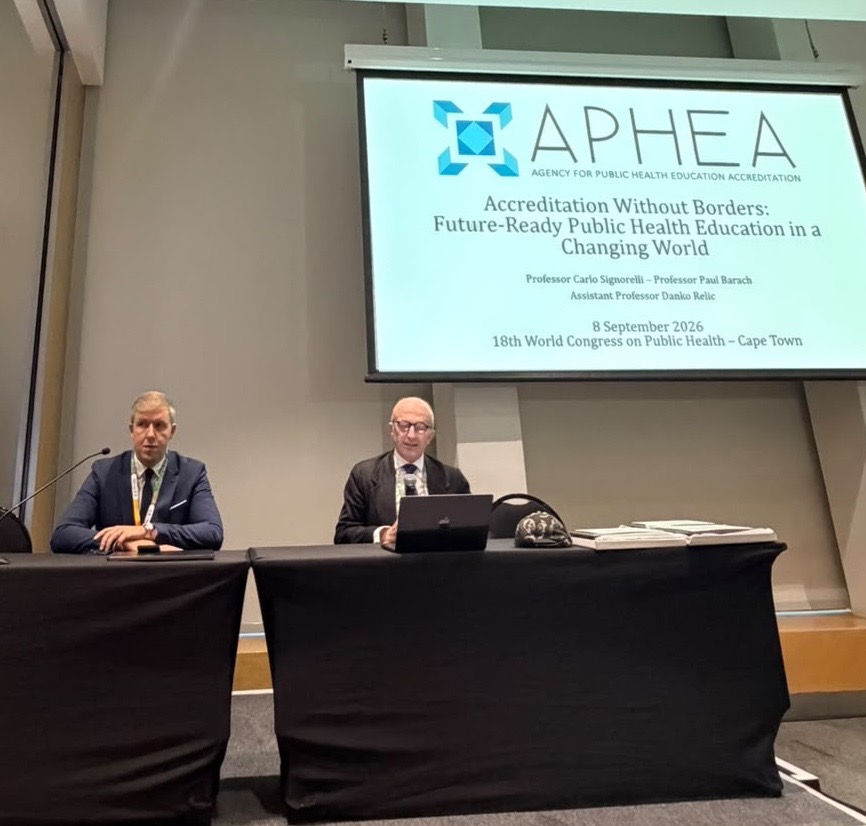
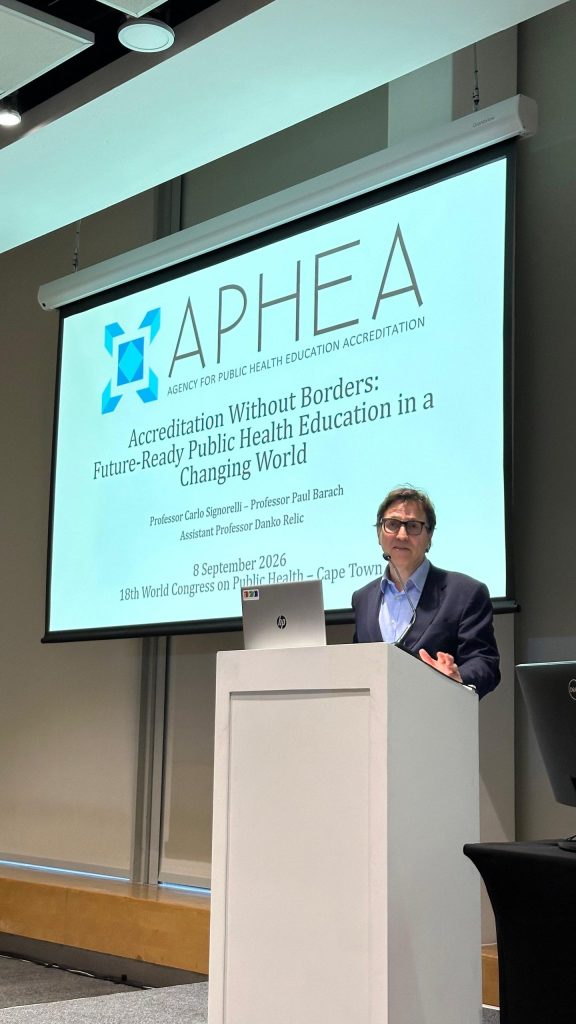
A central part of APHEA’s participation was the special session: Accreditation Without Borders: Future-Ready Public Health Education in a Changing.
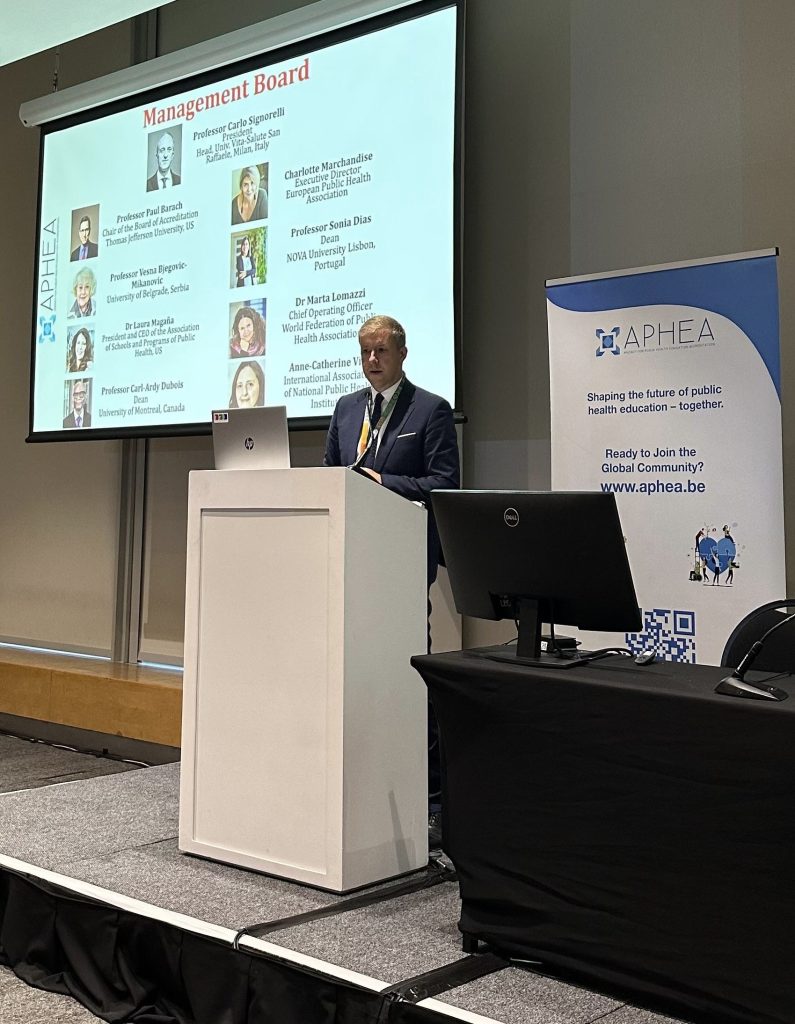
The session opened with introductory remarks by Professor Carlo Signorelli, President of the APHEA Management Board. Professor Paul Barach, Chair of the APHEA Board of Accreditation, then addressed the fundamental question of why accreditation matters, while Dr Danko Relić, APHEA Executive Director, presented APHEA’s services and their contribution to improving the quality, comparability and international recognition of public health education.
The discussion was enriched by experiences from institutions operating in different educational and geographical contexts:
- Professor Hazem Agha, Al-Quds University, Palestine;
- Dr Kagiso Kgakge, Boitekanelo College, Botswana; and
- Professor Iwona Kowalska-Bobko, Jagiellonian University Medical College, Poland.
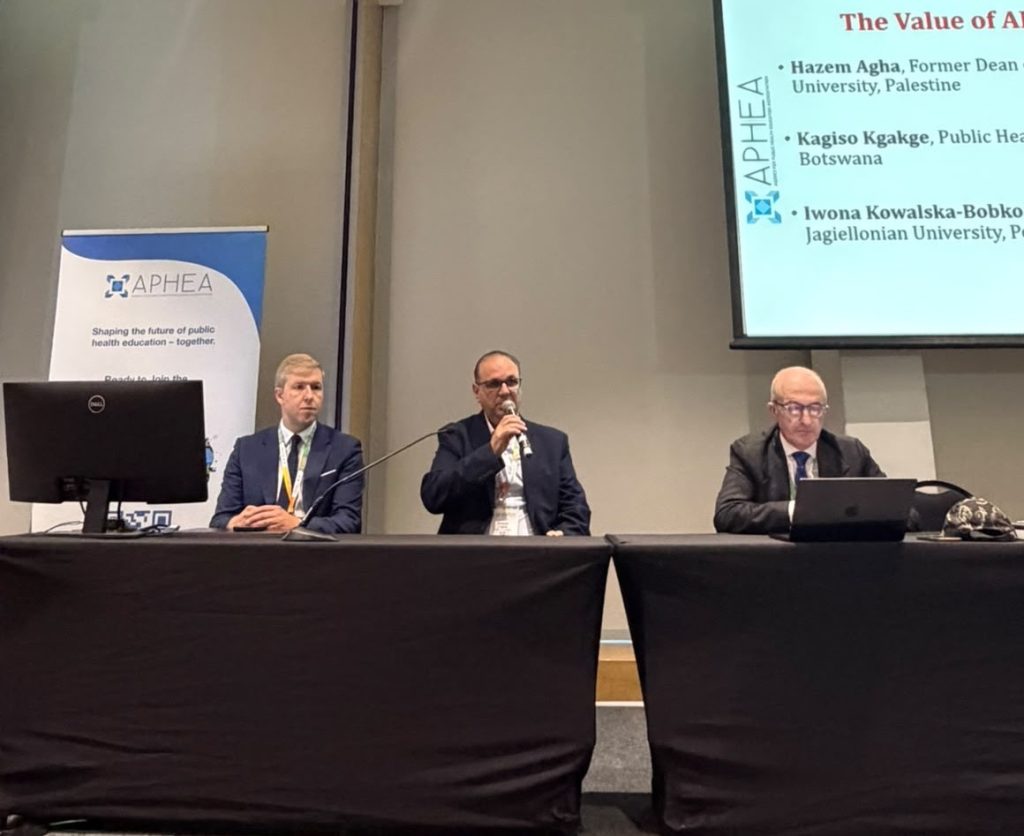
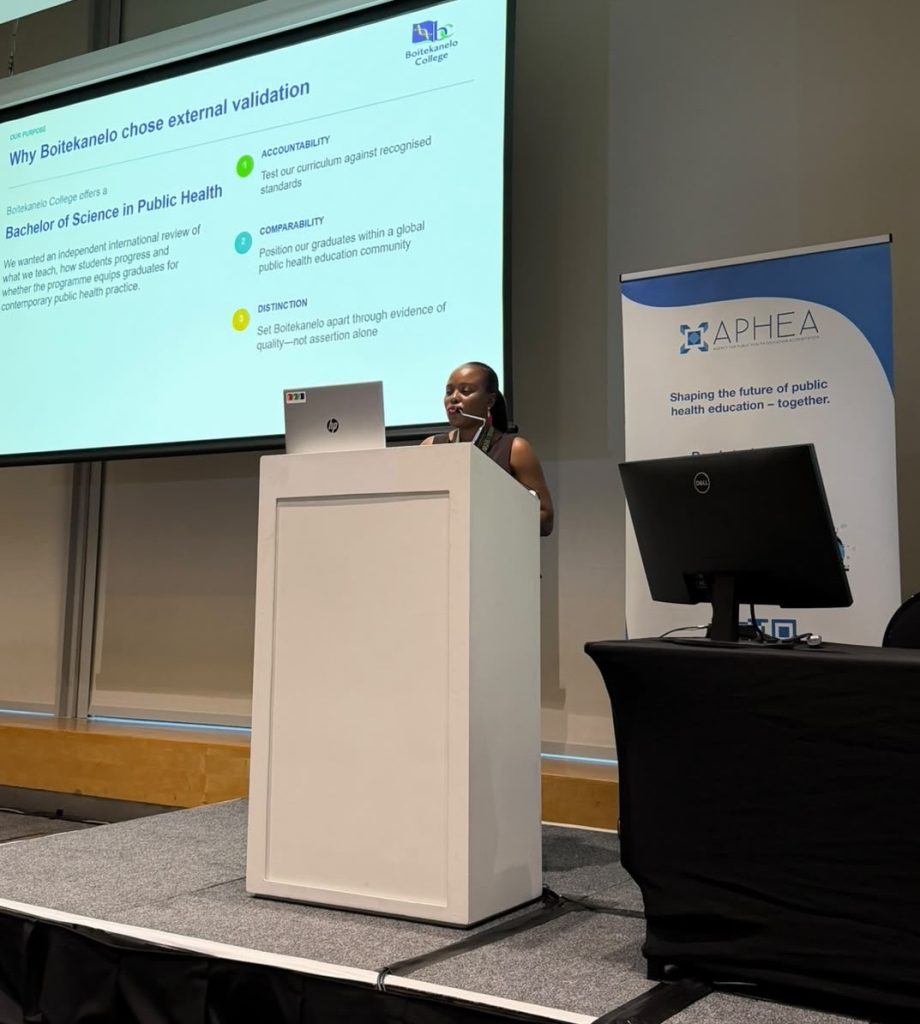
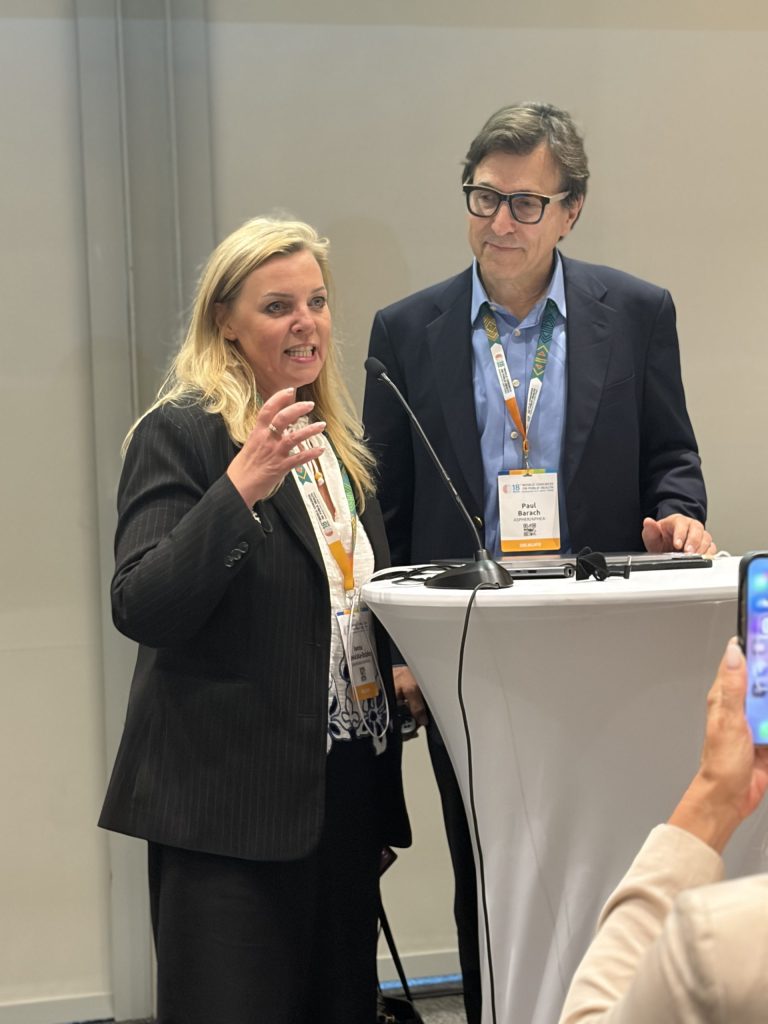
Their contributions demonstrated how external quality assurance can support institutional development, strengthen curricula and learning outcomes, enhance international visibility and encourage a lasting culture of quality improvement.
The session also underlined that accreditation is not merely a formal assessment or a label of excellence. It is a collaborative process that helps institutions identify strengths, address areas for improvement and ensure that public health education remains responsive to changing population needs.
Engaging with the global public health community
Throughout the Congress, APHEA maintained an exhibition presence and participated in a dedicated poster session, creating valuable opportunities to engage directly with delegates and present its accreditation, curriculum validation and continuing training event evaluation services.
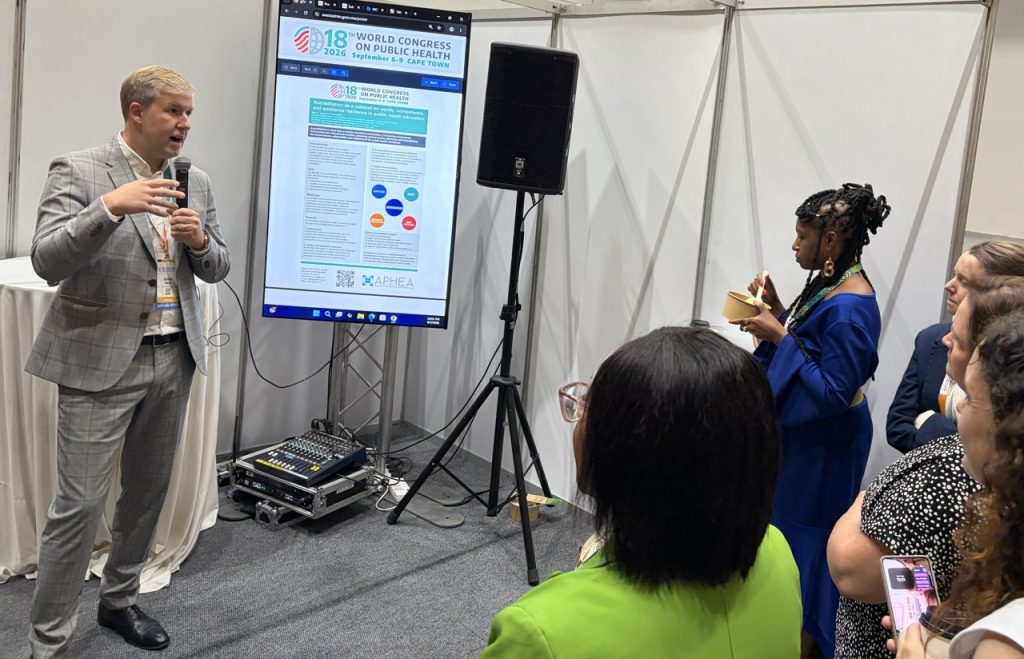
APHEA’s poster highlighted four interconnected outcomes of quality assurance:
- Competence – ensuring that graduates acquire the knowledge and skills required for effective practice;
- Quality – supporting transparent standards and continuous improvement;
- Comparability and professionalisation – strengthening the recognition of qualifications and the public health profession across borders; and
- Equity and resilience – preparing professionals to respond to diverse population needs and future health challenges.
Through direct exchanges with universities, schools and programmes of public health, professional associations and individual experts, APHEA discussed the practical value of independent quality assurance and the different pathways available to institutions seeking external recognition.
Strengthening partnerships across regions
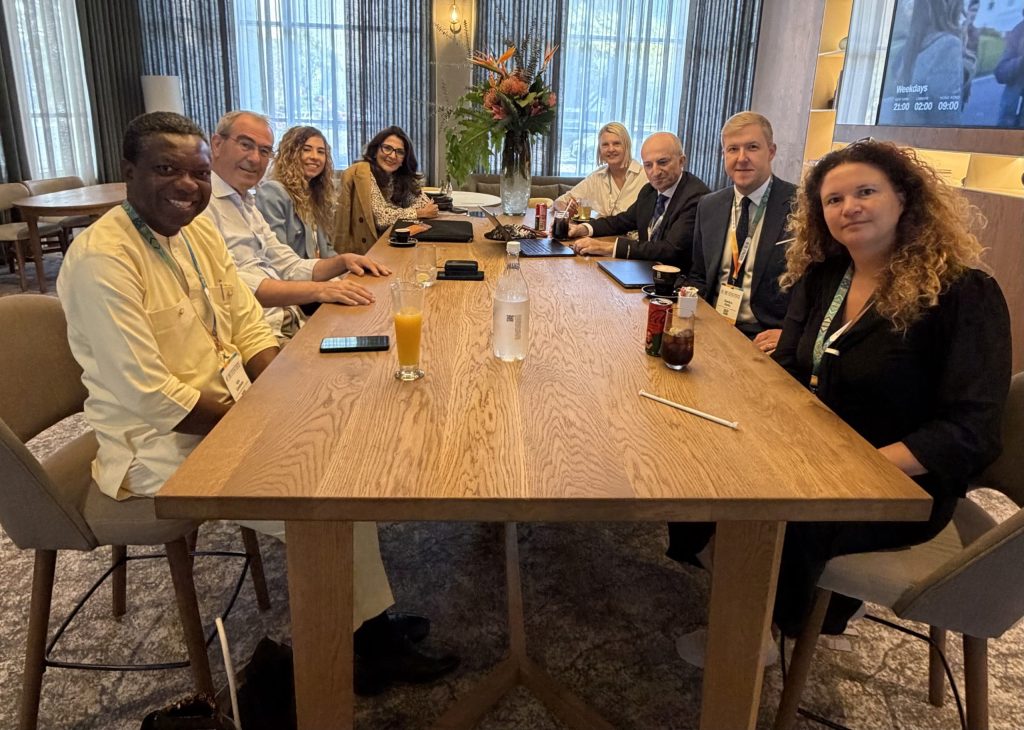
Cape Town also provided an opportunity for APHEA representatives, Board members, reviewers and affiliated delegates to discuss the organisation’s future development. The APHEA community present included Professor Carlo Signorelli, Professor Paul Barach, Professor Ramunė Kalėdienė, Dr Yannis Skalkidis, Professor Godwin Aja, Dr Flavia Pennisi, Dr Laura Magaña, Marta Lomazzi, Dr Danko Relić and other close collaborators and institutional partners.
Discussions with representatives of universities, public health institutes and professional organisations from Europe, Africa, the Middle East and other regions focused on workforce professionalisation, competency-based education, curriculum development and quality-assurance approaches that remain sensitive to local contexts.
The Congress also created opportunities to explore stronger cooperation with the World Federation of Public Health Associations and its partners. APHEA looks forward to building on these discussions through accreditation, joint sessions and continued advocacy at future World Congresses on Public Health.
APHEA extends its sincere appreciation to the World Federation of Public Health Associations, the Public Health Association of South Africa, the Congress organisers, speakers, institutional representatives and delegates who contributed to these valuable exchanges.